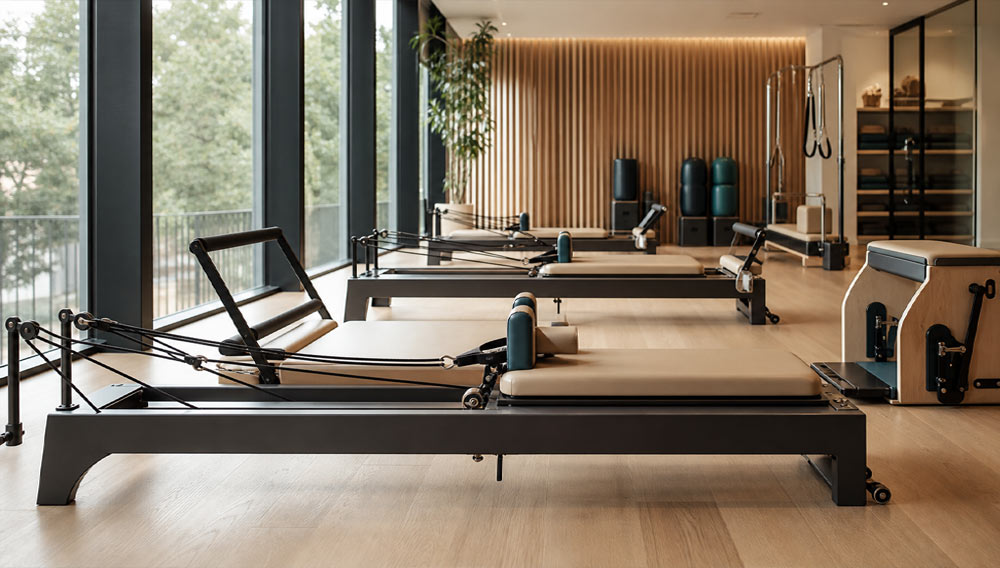
A Pilates reformer is one of the most important investments for a professional Pilates studio. It influences the training experience, class organization, visual appearance and long-term operation of the facility.
With many models and configurations available, studio owners and distributors should compare more than price and appearance. Frame stability, carriage movement, spring resistance, adjustability and available space all deserve careful consideration.
Understand the Studio’s Training Needs
Begin by defining how the reformer will be used. A private studio may focus on individual instruction, while a larger facility may operate group classes throughout the day.
Consider the experience level of the intended users and the types of exercises included in the training program. Studios offering beginner classes may prioritize simple adjustments and easy access. Advanced training facilities may require additional accessories and configuration flexibility.
A clear understanding of the studio’s services makes it easier to select suitable equipment.
Choose the Right Frame Construction
The frame supports the entire reformer and affects stability during movement. It should remain secure while users perform controlled exercises in different positions.
Pilates reformers may use metal, wood or a combination of materials. Each option creates a different visual style and may have different maintenance requirements.
The best choice depends on the studio environment, expected usage and desired appearance. Regardless of material, the frame should feel stable and properly finished.
Evaluate Carriage Movement
Smooth carriage movement is essential to the Pilates experience. The carriage should travel consistently along the rails without unnecessary vibration, sudden resistance or distracting noise.
Quiet operation is especially valuable in studios with multiple reformers. Excessive noise can interfere with instruction and reduce the calm atmosphere expected in a professional Pilates environment.
When comparing equipment, review product videos or test the carriage whenever possible.
Compare Spring Resistance
Springs provide adjustable resistance for different exercises and training levels. The resistance should feel controlled and predictable throughout the movement.
A professional Pilates reformer normally includes several spring options so instructors can adapt exercises to different users. The spring attachment system should be accessible and secure.
Buyers should also ask whether replacement springs and related components are available for future maintenance.
Review the Footbar and Adjustment System
The footbar supports many reformer exercises and should offer stable positioning. Different adjustment options can help instructors modify the equipment for various exercises and user heights.
Adjustment mechanisms should be straightforward, secure and suitable for repeated use. Complicated adjustments can slow down group classes, while poorly secured components may affect the training experience.
Headrests, shoulder rests and rope systems should also be reviewed for comfort and practical operation.
Inspect Upholstery and Padding
The carriage upholstery is in frequent contact with users. It should provide sufficient support without feeling excessively hard or soft.
Examine the surface material, stitching and padding consistency. The upholstery should also be practical to clean between sessions.
Color customization can help the equipment match the studio’s branding, but durability, comfort and maintenance should remain the primary considerations.
Measure the Available Studio Space
Before ordering, confirm the dimensions of the Pilates reformer and the usable area of the studio. Space is required not only for the equipment itself but also for instructors and users to move around it.
Consider:
- Distance between reformers
- Instructor access
- Walkways
- Storage areas
- Reception and waiting spaces
- Access for delivery and installation
A clear floor plan can help determine the appropriate number of reformers without creating an overcrowded environment.
Consider Group-Class Efficiency
Studios offering group classes benefit from consistent equipment configurations. When all reformers have similar adjustments and resistance options, instructors can manage sessions more efficiently.
Adequate spacing also allows the instructor to observe users and provide corrections. Equipment should be positioned so users can enter, exit and perform exercises without interfering with neighboring stations.
Ask About Accessories
Depending on the training program, the studio may require accessories such as boxes, jump boards, straps or additional resistance components.
Confirm which accessories are included and which must be purchased separately. Accessories should be compatible with the selected reformer and suitable for the exercises offered by the studio.
Explore Customization Options
Customization can help create a distinctive and consistent studio environment. Available options may include frame finishes, upholstery colors, logos and equipment configurations.
Before confirming customized Pilates equipment, request clear product details and color references. Branding position, specifications and packaging requirements should be approved before production.
Plan for Maintenance
Regular inspection and maintenance help Pilates equipment operate smoothly. Carriage wheels, rails, ropes, springs and adjustment components should be checked according to usage frequency.
Studios should keep frequently required components available and establish a simple inspection routine. Proper cleaning and maintenance can support a consistent training experience and reduce unexpected downtime.
Select a Reformer for Long-Term Studio Use
The right professional Pilates reformer should combine stability, smooth movement, practical adjustments and comfortable contact surfaces. It should also fit the studio’s available space, visual identity and training model.
Dezhou Paowo Sports Goods Co., Ltd. provides professional Pilates reformers, Wunda chairs and related equipment for studios, distributors and international project buyers. Flexible configurations and customization options are available for different business requirements.