Commercial gym equipment must perform reliably under frequent use. While appearance and price are easy to compare, the real quality of a fitness machine depends on its construction, stability, movement, materials and manufacturing details.
For gym owners, distributors and project buyers, understanding these factors can make equipment comparisons more practical and reduce the risks associated with purchasing decisions.
Examine the Frame Construction
The frame is the foundation of commercial fitness equipment. It must remain stable while supporting repeated movement and resistance.
When evaluating a machine, examine the main structure, connection points and areas that carry the greatest load. The equipment should not feel unstable during normal operation.
Frame design should also support practical entry, exit and adjustment. A strong frame is important, but it should not interfere with the user’s movement or make the machine unnecessarily difficult to use.
Review the Welding and Finish
Welding quality can provide useful information about manufacturing consistency. Welded areas should appear secure and suitable for the structural requirements of the machine.
The surface finish also deserves attention. Powder coating or other protective finishes can improve appearance and help protect exposed metal surfaces during daily use.
Look for consistent color, clean edges and properly finished connection areas. Small visual details often reflect the level of attention applied during production.
Test Equipment Stability
Commercial equipment should remain stable throughout the exercise. Excessive movement can affect user confidence and may indicate problems with the structure, assembly or floor contact points.
Stability is especially important for:
- Plate-loaded machines
- Benches
- Squat racks
- Cable systems
- Multifunctional training equipment
- High-intensity cardio machines
Floor conditions and installation also influence stability, so equipment should be assembled and positioned according to the manufacturer’s requirements.
Evaluate the Movement Path
A machine may look impressive but still provide an uncomfortable training experience. The movement path should feel smooth, controlled and appropriate for the intended exercise.
Resistance should remain predictable throughout the movement. Handles, pads and pivot points should support the user without forcing the body into an awkward position.
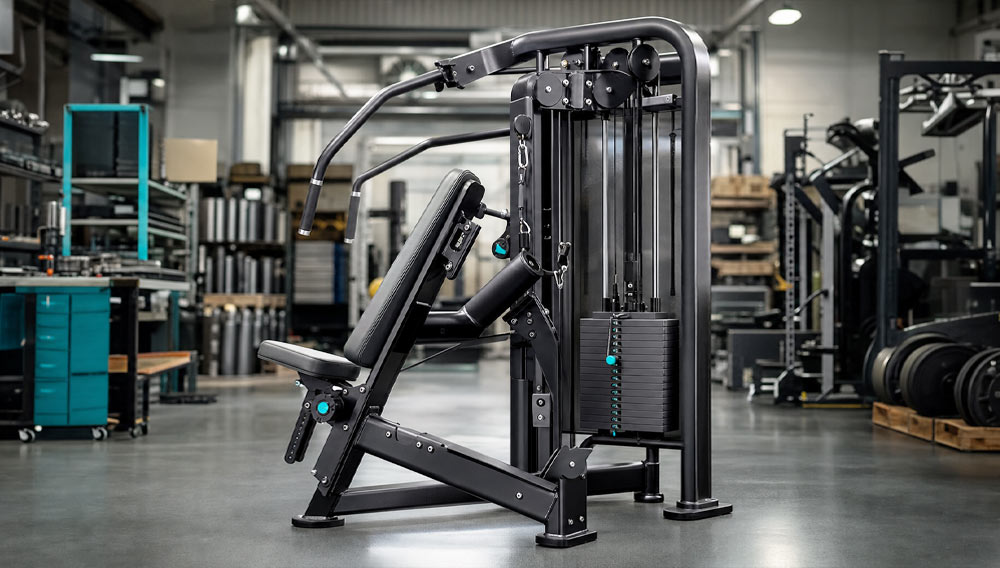
For selectorized machines, buyers should examine cable movement, pulleys, guide rods and weight-stack operation. For plate-loaded machines, check the balance of the movement and the positioning of loading points.
Consider Ergonomic Adjustments
Commercial gyms serve users with different heights, body proportions and experience levels. Adjustment systems help more people use the same machine safely and comfortably.
Useful ergonomic features may include:
- Adjustable seats
- Adjustable backrests
- Multiple handle positions
- Clear adjustment markers
- Accessible starting positions
- Easy entry and exit
Adjustment components should feel secure once they are locked in position. They should also be simple enough for members to operate without constant staff assistance.
Inspect Upholstery and Contact Surfaces
Seats and pads directly affect comfort and durability. Upholstery should provide appropriate support while maintaining its shape during regular use.
Check the stitching, surface texture, pad density and attachment points. Frequently touched areas such as handles and pads should be practical to clean and maintain.
The selected material should suit the intended environment. A busy commercial gym may have different durability requirements from a private training studio.
Check Moving and Adjustment Components
Fitness equipment depends on many smaller components, including bearings, pulleys, cables, springs, pins and adjustment mechanisms. These components influence movement quality and long-term maintenance.
Moving parts should operate smoothly without unnecessary noise or irregular resistance. Adjustment pins should align correctly, while cables and pulleys should move consistently.
Ask the supplier about maintenance requirements and the availability of frequently replaced parts.
Review Safety Details
Safety should be considered throughout the equipment design. The machine should provide sufficient clearance around moving parts and reduce unnecessary pinch points.
Handles and support areas should be positioned logically. Weight-loading areas should be accessible, and storage points should not interfere with movement.
Warning labels and operating instructions should be clear where required, particularly for equipment intended for public commercial use.
Compare Specifications Carefully
Equipment with a similar appearance may differ in dimensions, weight, materials, adjustment range and intended use. Buyers should request detailed specifications instead of relying only on product photographs.
Useful information includes:
- Product dimensions
- Machine weight
- Weight-stack or loading capacity
- Frame and material information
- Available adjustments
- Packing dimensions
- Customization options
- Electrical requirements for cardio products
Accurate specifications also help with floor planning, transport and installation.
Assess the Manufacturer’s Communication
Product quality is closely connected to communication and production control. A reliable fitness equipment manufacturer should clarify specifications, customization details, packaging and order requirements before production.
Buyers should provide clear product lists and confirm all important details in writing. Product drawings, color references and branding requirements should be approved before manufacturing begins.
Choose Quality Based on Long-Term Use
Evaluating commercial gym equipment quality requires more than checking its appearance. Frame stability, movement performance, ergonomics, materials and manufacturing details all affect the long-term value of the product.
Dezhou Paowo Sports Goods Co., Ltd. focuses on practical design, dependable construction and flexible equipment solutions for commercial gyms, distributors and international fitness projects.